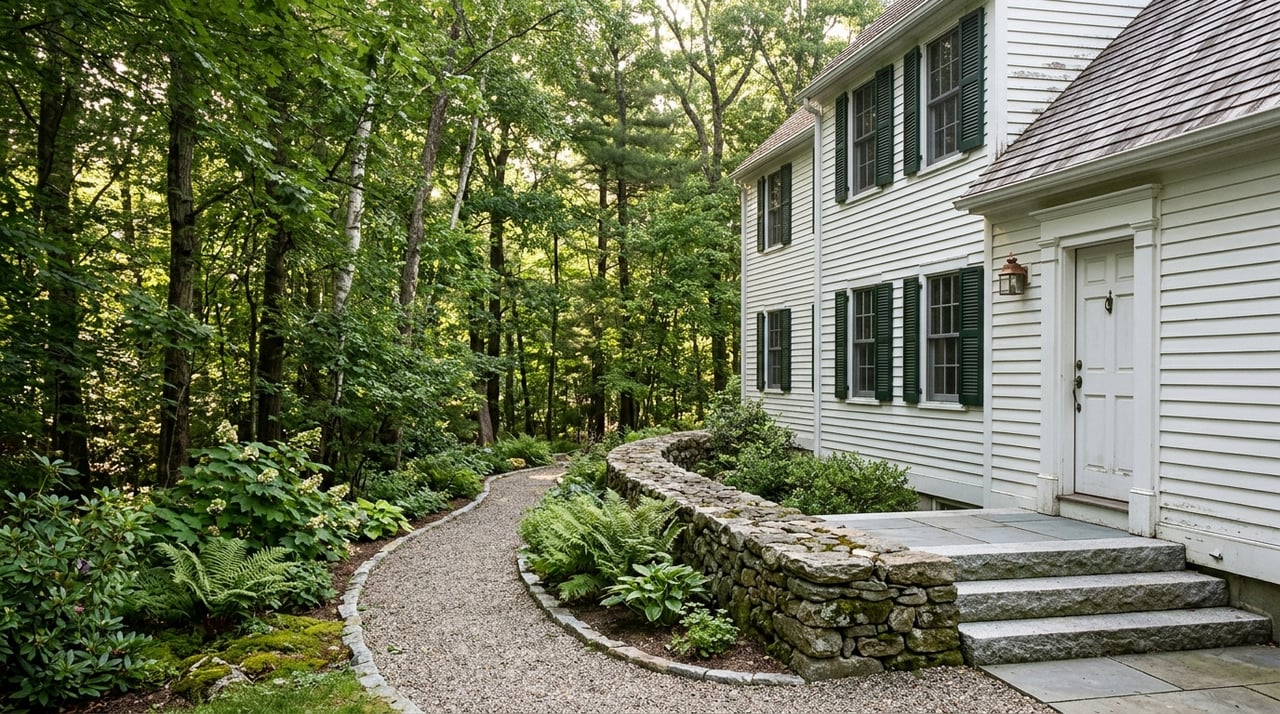
If you are considering Sudbury, you are probably trying to picture what daily life actually feels like there. Is it a town with one busy downtown, or something more spread out and scenic? The short answer is that Sudbury offers a different rhythm, with village centers, civic gathering places, extensive open space, and a strong sense of history all shaping how you live day to day. Let’s dive in.
Sudbury at a Glance
Sudbury is a Middlesex County town with about 19,643 residents spread across 24.3 square miles. The 2020 Census counted 18,934 residents, which works out to roughly 780 people per square mile.
That scale helps explain the town’s feel. Rather than a compact, dense downtown, Sudbury reads more like a low-density suburb with several village-style centers connected by key roads and community destinations.
Sudbury’s Village Pattern
One of the best ways to understand living in Sudbury is to think in terms of villages instead of one central hub. Historically, the town developed around roads like Concord Road, Hudson Road, and Maynard Road, and those routes still help organize daily life today.
By the turn of the 20th century, Sudbury had three main villages: South Sudbury with Mill Village, Sudbury Center, and North Sudbury. South Sudbury was the economic center, Sudbury Center served as the government and arts center, and North Sudbury functioned as a smaller village area with homes and small industries.
That pattern still matters if you are house hunting. Instead of expecting everything in one walkable core, you are more likely to move between distinct areas for errands, recreation, town services, and community activities.
Everyday Hubs in Sudbury
Sudbury’s civic buildings play a big role in everyday life. Town Hall, Goodnow Library, and the Fairbank Community Center are especially important anchors.
Fairbank is one of the town’s most practical gathering places because it brings together Park and Recreation, the Council on Aging, the School Committee, Sudbury Public Schools, and the Teen Center. For many residents, that kind of shared-use space makes town services feel accessible and connected.
Goodnow Library adds another layer to the town’s community feel. The library opened in 1863, its original building is listed on the National Register of Historic Places, and current services include meeting rooms, museum passes, computers and Wi-Fi, a reference desk, exhibits, adult programs, and a NOW Lab.
How Schools Fit Into Daily Life
Schools are also part of Sudbury’s day-to-day geography. Sudbury Public Schools includes four elementary schools, Haynes, Loring, Nixon, and Noyes, along with Curtis Middle School, while Lincoln-Sudbury Regional High School serves high school students.
For buyers, this matters because it helps explain traffic patterns, activity nodes, and how families often move through different parts of town during the week. Even if schools are not your main reason for moving, they still shape the flow of local life.
Trails and Open Space Stand Out
If you value access to nature, Sudbury makes a strong impression. The town’s open-space inventory counted about 4,869 acres of conservation and recreational land, and the Conservation Commission says all but one of Sudbury’s large conservation parcels are open to the public.
That is not just a nice extra. It is a major part of how the town functions and how residents use their free time.
The town lists many public properties with managed trails, including:
- Barton Farm
- Broadacres
- Davis Farm
- Frost Farm
- Haynes Meadow
- Hop Brook Marsh
- King Philip Woods
- Landham Brook Marsh
- Lincoln Meadows
- Nobscot
- Piper Farm
- Poor Farm Meadow
- Tippling Rock
What the Trail Network Feels Like
Sudbury’s trail system is appealing because it does not feel cut off from everyday life. In several places, open space connects naturally with neighborhoods, schools, and civic destinations.
Haynes Meadow is a good example. Its trails connect to Curtis Middle School and the Sudbury Valley Trustees’ Gray Reservation, which helps make open space feel woven into the town rather than tucked away at the edges.
Nobscot is another standout property. It includes 118 acres of woodland, meadows, historic sites, and an abandoned orchard, with trail use suited to hiking, nature study, snowshoeing, and cross-country skiing.
Piper Farm helps show the bigger picture. The town describes it as a core property in a network that runs from the Sudbury River toward the Town Center and from Great Meadows Wildlife Refuge toward Assabet Wildlife Refuge, which supports both shorter local walks and longer cross-town outings.
Trail Access Is Still Evolving
For buyers who care about biking and multi-use paths, Sudbury’s trail story is still developing. The town has an active Rail Trails Advisory Committee focused on the Bruce Freeman Rail Trail and the Mass Central Rail Trail.
That signals something useful about Sudbury. Trail access is not just part of the town’s past or present identity, but also an ongoing local priority.
History Is Part of the Town’s Identity
Sudbury’s long history is not tucked away in a museum. It shows up in the layout of the town, its landmarks, and its historic districts.
The town was incorporated in 1639, and several areas still reflect that deep history. Sudbury recognizes four historic districts: the Town Center, Wayside Inn District, King Philip District, and George Pitts Tavern District.
For buyers, this is more than background color. The Historic Districts Commission says these districts are subject to restrictions and controls that can include exterior design features, landscaping, stone walls, and signs.
What Historic Districts Mean for Buyers
If you are drawn to an older home or a property in one of Sudbury’s historic areas, it is worth understanding the local framework early. Historic-district status can affect renovation choices, especially for exterior changes.
That does not make these homes less appealing. It simply means that character and stewardship often go hand in hand, and buyers should factor that into their planning.
Landmarks That Shape Sudbury’s Character
The Wayside Inn is Sudbury’s signature landmark. According to its official site, it began as a two-room home for travelers on the Old Boston Post Road in 1716 and now reflects more than three centuries of history and hospitality.
The property includes more than 100 acres and nine historic buildings preserved by the Wayside Inn Foundation. The grounds are open to the public from dawn to dusk, and the site remains active for dining, lodging, functions, and events.
Other historic references also help define Sudbury’s identity. These include the Loring Parsonage, First Parish Meeting House, the Wadsworth Monument, the Redstone Schoolhouse, and the George Pitts Tavern area.
The Sudbury Centre Historic District includes the Common where militia and minutemen gathered on April 19, 1775. The George Pitts Tavern district is linked to a 1721 meeting that helped lead to Sudbury’s separation from Wayland.
What Living in Sudbury Feels Like
So what does all of this mean when you are deciding whether Sudbury fits your lifestyle? In practical terms, Sudbury is best understood as a town of linked village centers, civic amenities, and substantial open space rather than one dense retail district.
That often means more driving between errands than you might expect in a compact downtown suburb. At the same time, it can also mean easier access to trails, conservation land, community programming, and places that reflect the town’s long history.
For many buyers, that combination is the draw. You get a town structure that feels established and distinctive, with room to spread out and plenty of ways to connect to the outdoors and community life.
If you are exploring Sudbury or comparing it with other MetroWest towns, working with a local team can help you understand how different areas of town connect to your daily routine, priorities, and housing goals. Rutledge Properties offers the kind of hands-on, locally grounded guidance that can make that search feel clearer from the start.
FAQs
What is the overall layout of Sudbury, Massachusetts?
- Sudbury is best understood as a low-density town with several village-style centers rather than one compact downtown, with major roads like Concord Road, Hudson Road, and Maynard Road helping connect daily destinations.
What are the main village centers in Sudbury?
- Historically, Sudbury developed around South Sudbury with Mill Village, Sudbury Center, and North Sudbury, and that village-based pattern still helps explain where activity clusters today.
What community amenities are important in Sudbury?
- Key civic anchors include Town Hall, Goodnow Library, and the Fairbank Community Center, which houses multiple town services and programs in one location.
How much open space does Sudbury have?
- Sudbury’s open-space inventory counted about 4,869 acres of conservation and recreational land, and the Conservation Commission says all but one of the town’s large conservation parcels are open to the public.
What are some popular trail areas in Sudbury?
- Public properties with managed trails include Nobscot, Piper Farm, Haynes Meadow, Barton Farm, Broadacres, Davis Farm, Frost Farm, Hop Brook Marsh, King Philip Woods, Landham Brook Marsh, Lincoln Meadows, Poor Farm Meadow, and Tippling Rock.
What should buyers know about historic districts in Sudbury?
- Sudbury has four recognized historic districts, and properties within them may be subject to restrictions and controls related to exterior design features, landscaping, stone walls, and signs.