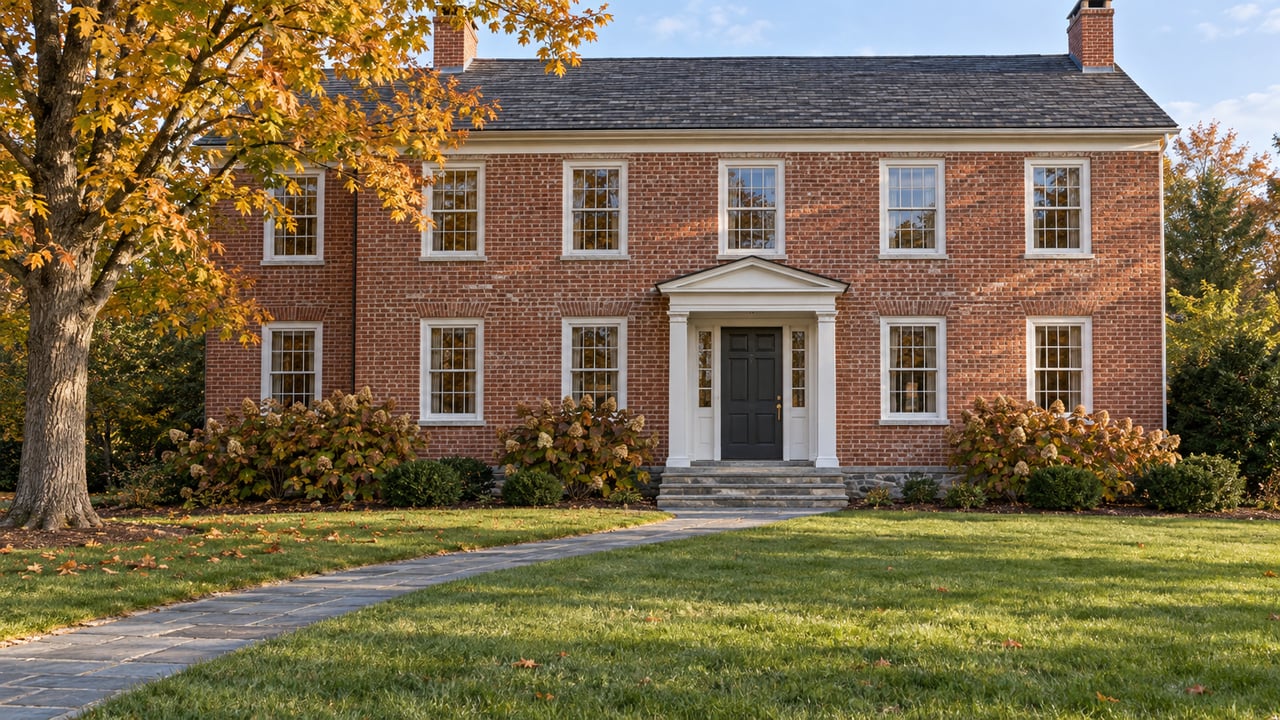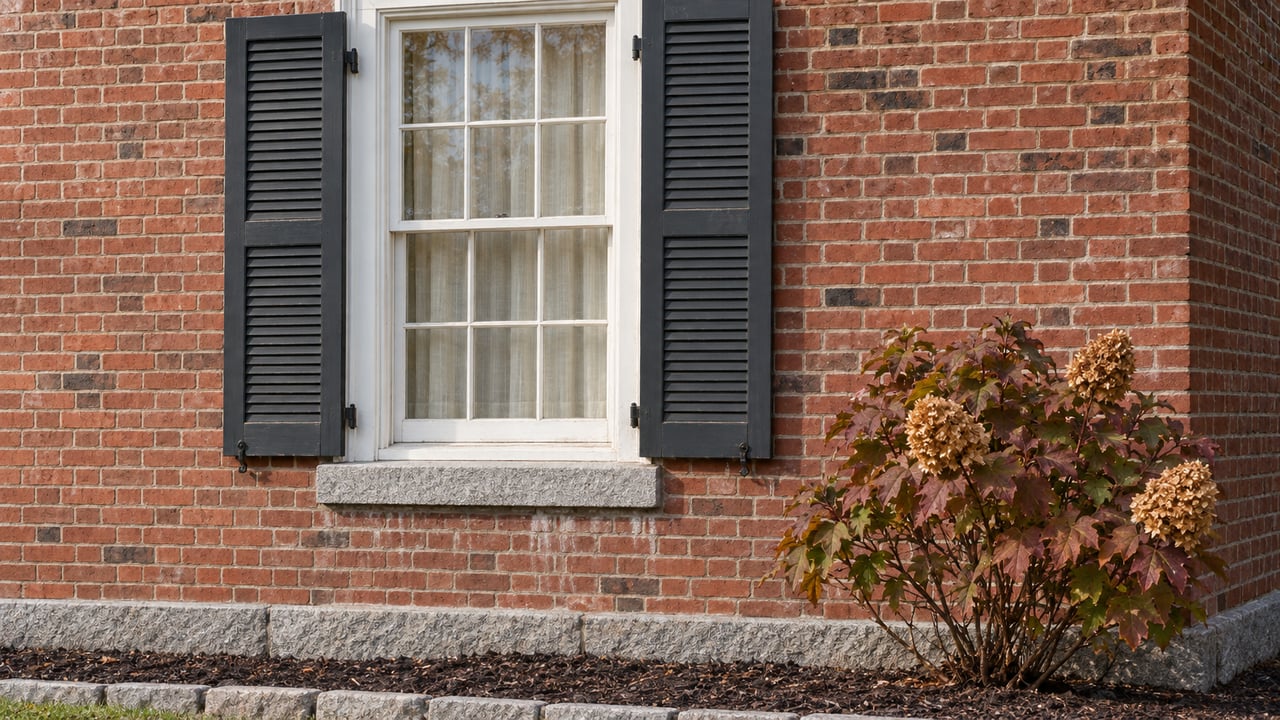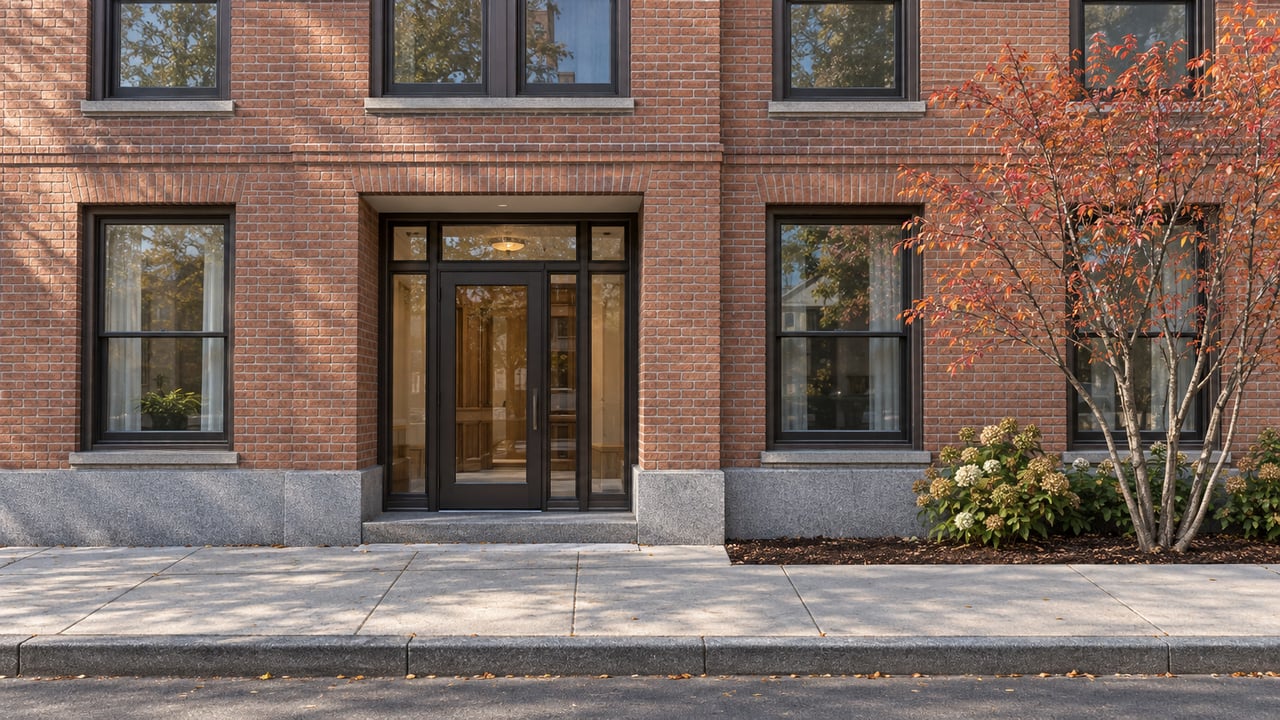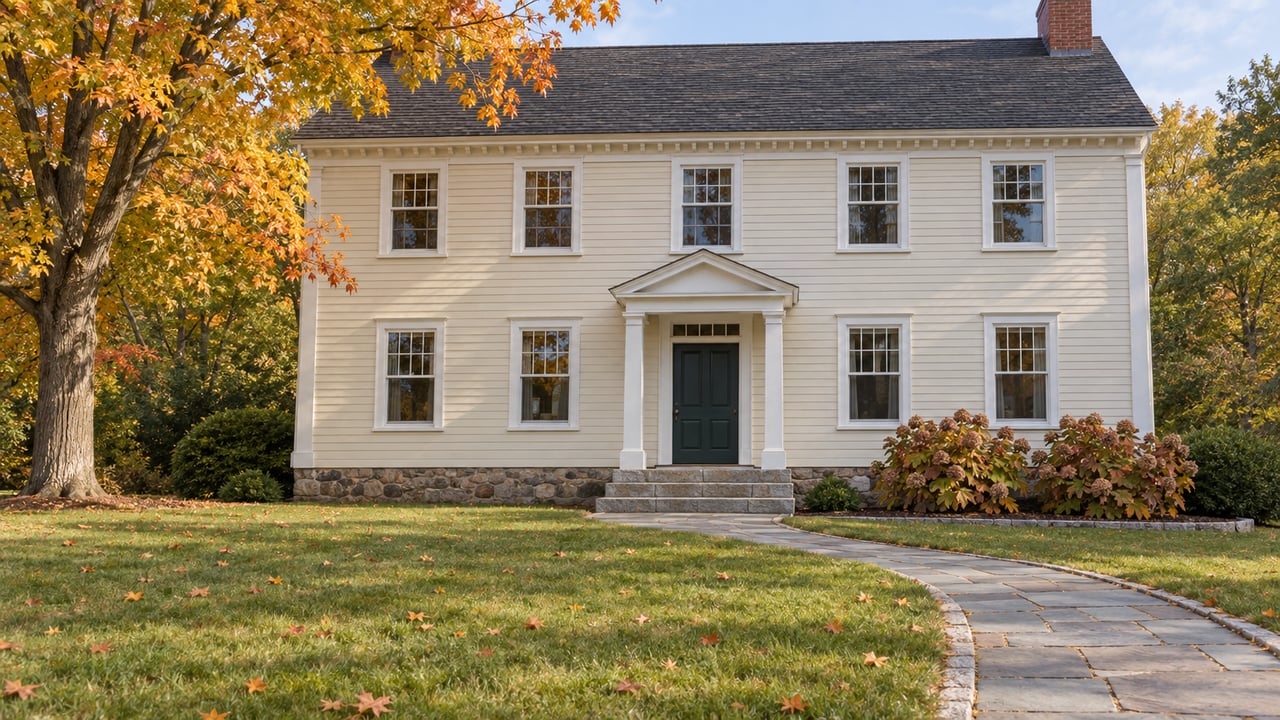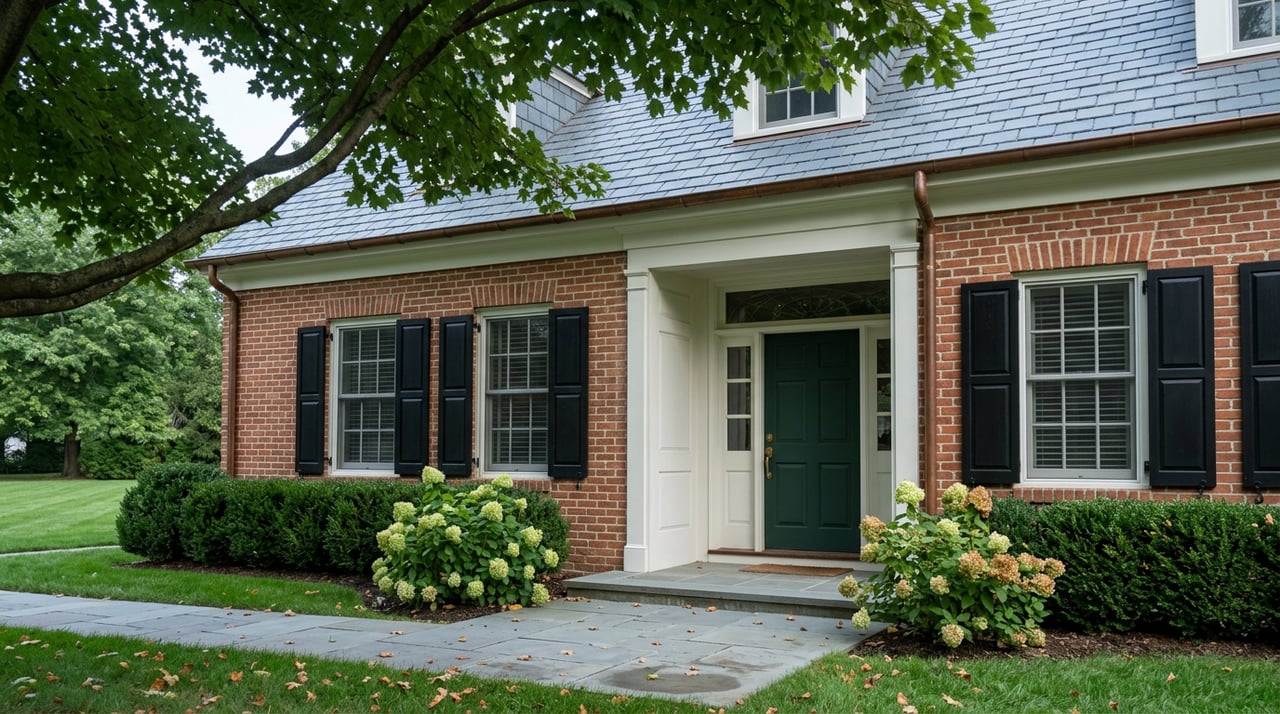
According to a May 2026 Boston Magazine feature, when architect David Stern and interior designer Diane McCafferty took on a project in Wellesley, the plan looked straightforward: clear the lot, build something modern, give their clients the house on their wish list. Then they learned the 1930s center-hall Colonial already standing there had been marked "preferably preserved" by the town's Historical Commission, which meant tearing it down would trigger a twelve-month demolition delay the town had adopted back in 2017.
"I told our clients that it would be more complicated to keep part of the existing structure, but we could get started right away," Stern told Boston Magazine. Rather than fight the delay, the team redesigned around it, folding a section of the original brick house into a new limestone-clad addition. The finished estate, built by The Lagassé Group with landscaping by Sudbury Design Group, reads as fully contemporary from the back and quietly traditional from the street.
Here's the detail that trips up a lot of buyers before they ever get this far: that house wasn't sitting in one of Wellesley's mapped historic districts. It didn't need to be. In Wellesley, the rule that can add a year to your renovation or rebuild timeline has almost nothing to do with whether your street carries a historic designation. It has to do with whether the house was built on or before December 31, 1949.
Two Different Commissions, Two Very Different Reaches
Wellesley runs two separate review processes that get confused constantly, and the confusion is exactly where buyers get caught off guard.
The Historic District Commission reviews exterior alterations, not demolitions, and only within Wellesley's designated historic districts: the Cottage Street Historic District, created in 1980 to preserve 65 nineteenth-century houses built for local shoe-factory workers, plus a handful of single-building districts that include the Methodist Meeting House at 377 Weston Road, the Tufts House at 38 Lowell Road, the Sylvia Plath House at 26 Elmwood Road, and the Fiske House at 126 Woodlawn Avenue. Interior work is never reviewed here. Roughly seventy properties fall under this commission's authority, out of thousands of homes in town.
The Historical Commission is a different body entirely, and it administers the Historic Preservation Demolition Review bylaw, Article 46C, which passed at the 2017 Annual Town Meeting and took effect that August. This bylaw doesn't care about districts at all. It applies to any dwelling built on or before December 31, 1949, anywhere in Wellesley, the moment an owner proposes to demolish it entirely or remove or envelope 50 percent or more of its existing exterior.
| Historic District Commission | Demolition Review Bylaw (Article 46C) | |
|---|---|---|
| Triggers on | Exterior alterations visible from a public way | Full demolition or 50%+ exterior removal |
| Applies to | About 70 properties in designated districts | Any dwelling built on or before 12/31/1949, town-wide |
| Can require | Design approval before work proceeds | Up to a 12-month delay before a demo permit issues |
| Interior work | Not reviewed | Not reviewed |
Wellesley Town Hall and Fuller Brook Park are listed on the National Register. The actual regulatory teeth live in these two commissions.
The Date That Actually Matters
It's tempting to assume the demolition bylaw only snags grand Victorians with turrets and wraparound porches. It doesn't. At a January 2026 meeting, the Historical Commission voted to preferably preserve 45 Mayo Road, describing it as a good example of a Porter Colonial that fits the neighborhood's character. At the same meeting, commissioners preferably preserved 7 Woodcliff Road, a colonial revival cape built around 1940 in the Sheridan Estates neighborhood and designed by architect Gustav A. Hagen. Neither house needed to be architecturally rare to qualify. Both just needed to predate 1950.
The process itself starts small. The Swellesley Report says an owner or buyer files an Eligibility Notice with the Planning Department for a $50 fee. If the house was built after 1949, that's the end of it, no further review required. If it was built on or before that date, the Planning Department issues an Eligibility Notice confirming the building qualifies, and if the owner still wants to demolish more than half of it, a public hearing gets scheduled with the Historical Commission within 45 days.
What "Preferably Preserved" Actually Costs You
If the commission decides a house should be preferably preserved, the effect is a twelve-month delay on any demolition permit, counted from the date of that determination. The town charges $850 for a Preservation Determination review, up $50 from the 2024 rate, and separately pays a preservation planner $800 to research the property's history and prepare a report with a recommendation ahead of the hearing.
These aren't hypothetical numbers pulled from an old ordinance. As of this year's tracker on the Planning Department's site, 53 Hunnewell Street was determined preferably preserved, and 39 Emerson Road has been working through a waiver request that's been continued across meetings in May and June 2026. Cases like these can stretch across several hearing cycles even after the initial determination, which matters if your closing timeline assumes a fast permit turnaround.
The Waiver Is Where Most Cases Actually Land
Here's the part of the story that doesn't get mentioned enough: being preferably preserved isn't the end of the road, and most houses never even reach that point in the first place.
In the bylaw's first several months back in 2017, owners filed 37 Eligibility Notice applications. Eleven were built after 1949 and cleared immediately. Among the eligible houses, 12 were found not to need preservation and 7 were preferably preserved, and owners of 5 of those 7 applied for waivers right away. Fast forward to a July 2024 Historical Commission meeting, where a commissioner noted that Wellesley has 560 houses built before 1900 alone, and only 19 properties total have gone through the full demolition-delay process since the bylaw took effect. Most old houses in town are never formally tested by this rule at all, either because renovation plans stay under the 50 percent threshold or because owners work out design concerns with staff before a hearing is ever needed.
Even when a house is preferably preserved, the record shows waivers are a normal next step rather than a rare exception. At that same January 2026 meeting, the commission approved a waiver at 10 Alba Road by a 4-1 vote. Down the road, 45 Windsor Road took three separate hearings, but the owner's team came back each time with revisions: a landscape plan preserving 95 percent of existing trees, permeable walkways, dark-sky compliant lighting, and a commitment to work with a commission representative on the final roofline and doorway details. The waiver was approved.
What This Means If You're Buying an Older Wellesley Home
If a renovation or rebuild is part of your plan, the construction year matters more than the address. Confirm it early, before you're deep into architectural drawings, and don't assume that being outside Cottage Street or the single-building districts means you're clear. If the house predates 1950 and your plans call for removing half or more of its exterior, build the possibility of a review into your timeline from the start rather than discovering it after you've waived contingencies.
Filing early gives you a real answer instead of a guess. And if a hearing does turn into a preferably preserved determination, the pattern in Wellesley's own meeting minutes is consistent: applicants who come back with a redesign responsive to commission feedback, on tree preservation, massing, or rooflines, tend to get their waiver. Proposals that show up unchanged tend to get continued.
A Few Questions Worth Asking Before You Write an Offer
Does the bylaw still apply if a house is inside a historic district? Both processes can apply at once, and inside a Local Historic District the standard is actually tighter. Per the town's own design guidelines, demolition inside a district may not be permitted at all, with new construction required to match the district's character in size, form, and massing, rather than facing a delay-and-waiver path.
What if I only want to renovate, not demolish? The bylaw only applies to full demolition or removing and enveloping 50 percent or more of the exterior. Smaller renovations, and any interior work, don't trigger this review outside a mapped historic district.
Can I check whether a specific house has already been through this process? Yes. Wellesley's Planning Department posts pending and decided demolition review applications online, so you can look up an address's history before you make an offer instead of finding out after.
Old houses are one of the things that make Wellesley feel like Wellesley, and this bylaw exists because plenty of neighbors want to keep it that way. It's a workable process once you know it's coming. The trouble is only ever the surprise.
If you're weighing an older Wellesley property with renovation or rebuild plans, Rutledge Properties can walk through what a specific address's history looks like before you write an offer. Work With Us.
This article is general information, not legal, tax or financial advice. Consult a qualified professional about your situation.